



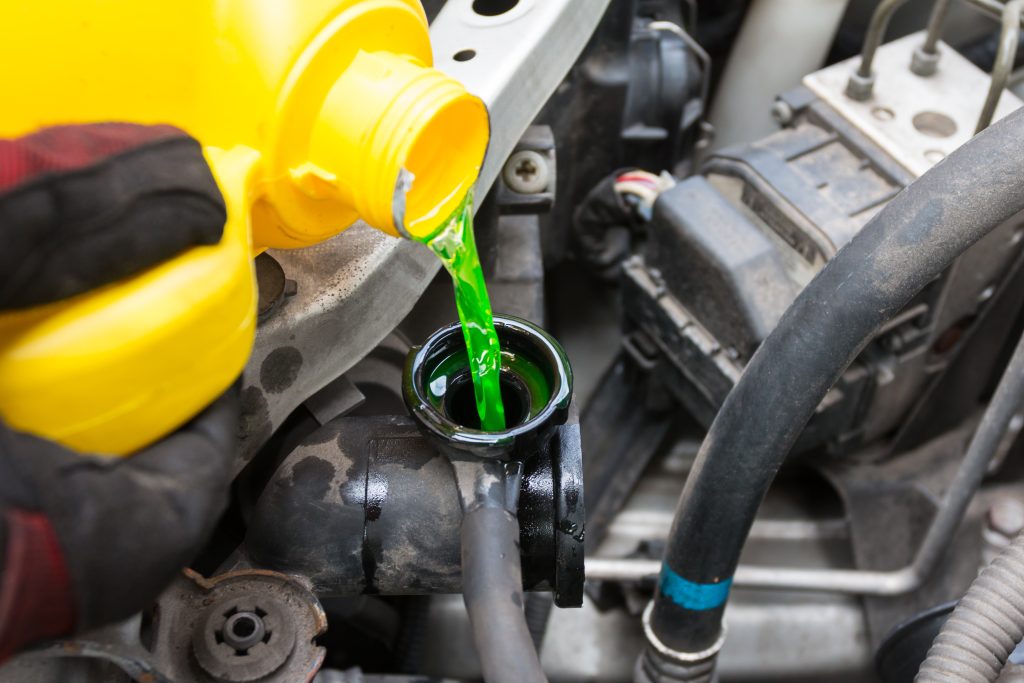
Combustion and the continuous movement of hundreds of engine components generate intense heat, which is swiftly removed by your Buick’s cooling system. Heat removal is essential, as sustained high temperatures can quickly damage sensitive engine components. As your Buick dealership, we want to tell you a few signs you need to visit us for a cooling system service.
Jammed Thermostat
The engine works most efficiently and effectively at temperatures between 185°F and 230°F. When the engine temperature reaches 180°F, the thermostat opens and releases coolant. The coolant is then pumped through the engine at high speed, absorbing engine heat as it moves. The heat is then transported to the radiator, where it’s removed by heat exchange with cooler air flowing in through the radiator grille.
The thermostat can become worn and jammed. If the thermostat jams open, coolant will be released and flow through the engine as soon as your Buick starts. As a result, your engine will use more fuel to reach the required operating level. If the thermostat jams closed, coolant won’t be released, and your engine will quickly overheat. We can fix this problem in minutes by installing a new thermostat.
Leaking Coolant
Coolant is highly pressurized to allow it to move quickly through the engine. Any damage to the cooling system, like worn gaskets, a hole caused by a sharp object thrown upon from the surface, or perforation damage from rust, will cause a rapid loss of coolant. As the coolant leaks, pressure in the cooling system drops, and the remaining coolant will slow down.
Fortunately, coolant leaks are noticeable as the fluid is available in colors like pink, green, orange, or blue. An internal coolant leak is also easy to spot, as the exhaust smoke will become thick and white. The engine temperature gauge will climb rapidly as coolant is lost, and the engine can suffer major damage if the leak isn’t repaired. We’ll trace and fix the leak, then refill the coolant.
Damaged Radiator Cap
The radiator cap on the top of the radiator controls pressure in the cooling system. If the pressure rises too high, the capo temporarily opens to bleed off the excess pressure, then closes again.
Tough, heat-resistant rubber seals secure the radiator cap. A cracked or damaged seal will allow coolant to escape, and the leaking coolant leaves white marks below the cap. A leaking radiator cap will cause the engine temperature to rise, and the check engine light will illuminate. Our technicians will examine the cap and replace it if it’s damaged.
If your cooling system isn’t working correctly, contact our service department ASAP at Everett Buick GMC in Bryant, AR.
Connect with us


- 2026 Buick models
- 2026 Envista and 2026 Encore GX
- 2026 GMC HUMMER EV Pickup
- 2026 GMC lineup
- 2026 GMC models
- 2026 lineup at Everett Buick GMC in Bryant, AR
- 2026 model year vehicles
- 2026 Sierra HD
- All-Weather Floor Liners
- Best Buick Gas Mileage
- Bryant Buick Dealer
- Bryant Buick Service
- Bryant GMC Dealer
- Buick Certified Service
- Buick Enclave
- Buick Encore GX
- Buick Envision
- Buick Envista
- Buick Models at Everett Buick GMC
- Buick SUV Lineup
- Buick U.S. Manufacturing
- Buick's 2026 Lineup
- Connectivity and Infotainment
- Dwight Everett
- Electric Vehicle Technology
- everett buick gmc
- Everett Buick GMC Service
- GMC Acadia
- GMC Accessories
- GMC Canyon
- GMC lineup
- GMC Models in Bryant, AR
- GMC Sierra 1500
- GMC Sierra 2500 HD
- GMC Sierra 3500 HD
- GMC Sierra EV
- GMC Sierra HD
- GMC Terrain
- GMC Yukon XL
- GMC Yukon:
- HUMMER EV Pickup
- HUMMER EV SUV
- myBuick mobile app
- Professional Grade philosophy
- Sierra 1500
- Sierra EV and HUMMER EV
- Sierra HD
- SUVs
- Tire Inspections
- Tire Pressure
- Tire Ratings
- Tire Safety Standards
- Top 2026 Technology Upgrades
- Towing and Trailering Technology